IRANZ continues to grow at pace, and I am delighted to welcome two new members to our association: NZ Product Accelerator and Blue Barn Life Sciences.
NZ Product Accelerator brings together industry, research, and academia to develop demand-driven innovation, connecting science and technology capabilities with real-world challenges facing New Zealand businesses and communities. Blue Barn Life Sciences, led by Associate Professor Eric Altermann, provides scientific consulting and technology commercialisation expertise across bioinformatics, microbiology, and biotechnology. Both organisations exemplify the breadth of capability and collaborative thinking that makes our Independent Research Organisations (IROs) such valuable contributors to New Zealand's innovation system.
This month's stories illustrate that contribution in action. Bragato Research Institute has helped advance international research into bat evolution, with Principal Scientist Dr Darrell Lizamore among the authors of a major study published in Nature - the cover, no less. Bragato's genomic sequencing capabilities, usually applied to grapevine research, were put to use investigating the endangered New Zealand lesser short-tailed bat. It is an excellent example of how research infrastructure can deliver benefits well beyond its original purpose.
Lincoln Agritech is working with Zeagold Nutrition to transform poultry waste into nutrient-rich compost and potential commercial fertiliser products. This partnership demonstrates how applied research can turn an environmental management challenge into an economic opportunity, supporting more sustainable production and reducing reliance on imported inputs.
We also highlight two important developments in the building sector. BRANZ has submitted its recommendations on the Building Amendment Bill, supporting reform while arguing that independent building research and the Building Research Levy must be protected. BRANZ noted that levy-funded research has played a critical role in improving New Zealand's building quality, resilience, and performance over many decades, and cautioned that changes which weaken this independent research capability could have long-term consequences for the industry's ability to respond to emerging challenges. Its submission reinforces the importance of maintaining a stable, industry-wide mechanism for investing in evidence-based research that benefits builders, homeowners, regulators and the wider construction sector. Meanwhile, the record response to the latest levy funding round, with 162 research concepts submitted by more than 70 organisations, demonstrates the demand for research addressing New Zealand's building and construction challenges. This breadth of interest reinforces the value of a sector-led approach to identifying and investing in research priorities.
Congratulations, too, to Te Tira Whakamātaki on becoming the first Aotearoa Indigenous Peoples' Organisation to join the International Union for Conservation of Nature within the Oceania region. Its membership strengthens opportunities for Māori leadership and knowledge to contribute to conservation efforts nationally and internationally.
Looking ahead, IRANZ members are actively considering how best to respond to the Government's Pillar Investment Plans and emerging mission-led funding opportunities. Our recent discussion highlighted the importance of collaboration between IROs, public research organisations and other partners, particularly where combining expertise and infrastructure can deliver greater impact. Rather than pursuing isolated proposals, we have an opportunity to develop strong, collaborative initiatives that address shared national priorities. With important funding decisions approaching and the wider policy environment still evolving, early engagement and a clear focus on the value each organisation can contribute will be essential.
Across these stories, a common theme emerges: New Zealand benefits when research capability is connected, shared and directed towards practical outcomes. IRANZ will continue to champion the contribution of our members and the importance of a research system that supports collaboration, innovation, and long-term national benefit.
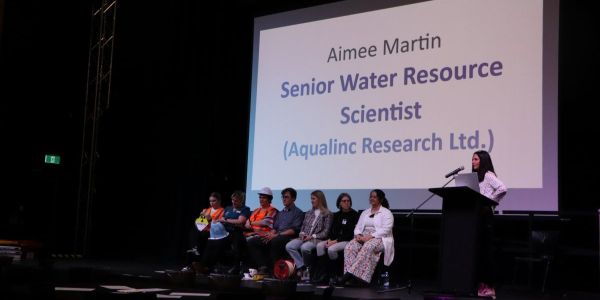
Aimee Martin, a Senior Water Resource Scientist at Aqualinc Research, recently attended an Inspiring the Future event at Rolleston College and was involved in a 'guess my job' event with Year 9 & 10 students. "They guessed I was a solar panel engineer, an arborist, and an environmental scientist - so close." Photo: Aqualinc.
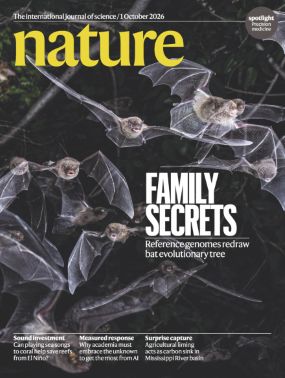
Bragato Research Institute has contributed to a major international study of bat evolution published in Nature, the cover article no less, with Bragato Principal Scientist Dr Darrell Lizamore among the authors of this significant research.
Bat1K is an international initiative working to sequence the genomes of approximately 1,400 bat species. Its researchers are investigating the genetic basis of bats' unusual adaptations, generating insights that could support evolutionary research and conservation.
The New Zealand lesser short-tailed bat (Mystacina tuberculata) was included in the project. Native to New Zealand and endangered, it is one of the few bats in the world that spends large amounts of time on the forest floor.
As part of the project, researchers collaborated with Bragato to sequence the genome of the lesser short-tailed bat using Bragato's Oxford Nanopore Technologies PromethION sequencer. The PromethION platform is normally used in BRI's research into genetic variation among grapevines, but they offer the technology as a service to other researchers from any field.
Access to PromethION DNA sequencing is available to Aotearoa's researchers. For more information or to discuss potential projects, contact sequencing@bri.co.nz.
Bats are extraordinary among mammals, having uniquely evolved powered flight and laryngeal echolocation, along with disease resistance, extended healthspans, and the ability to hibernate. BRI has been using its PromethION sequencer to help understand the evolutionary history of bats and their adaptations. Image: Nature Magazine.
New Zealand's largest egg producer generates a lot of organic waste, including manure and end-of-lay hens. Managing that waste safely is complex. Lincoln Agritech has partnered with Zeagold Nutrition to turn it into something valuable instead.
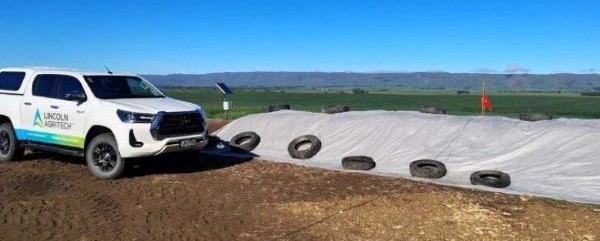
Through controlled field trials, Lincoln Agritech researchers tested different composting and conditioning approaches using poultry waste alongside carbon materials like wood chip and plant matter.
The trials showed strong results: the process safely broke down organic material and produced a nutrient-rich compost, suitable for on-farm use or further processing into concentrated pelletised fertiliser products.
That creates a new pathway for waste that would otherwise require disposal, turning it into a useful, marketable input instead.
Lincoln Agritech is continuing to support Zeagold as it scales up production and refines the product for market. The goal is a commercially viable solution that reduces waste, creates new revenue streams, and offers a locally made, sustainable alternative to imported fertiliser.
For Zeagold, and for other producers generating similar waste streams, this provides an alternative to disposal, turning a cost into a sellable product.
A record 162 research concepts have been submitted for the 2026 Building Research Levy funding round, competing for an estimated $10 million available for new research.
More than 70 organisations put forward ideas to tackle Aotearoa New Zealand's biggest building and construction challenges, from housing affordability and resilience to building quality and sustainability.
Submissions came from across the sector, including industry groups, universities, Public Research Organisations, Māori research groups, independent researchers, and BRANZ researchers.
It is the highest response to a Building Research Levy funding round and a significant increase from the 107 concepts received last year. The previous round funded 19 projects, including open-source granny flat designs, tools to help communities prepare for and recover from flooding, and guidance supporting iwi-led housing developments on Māori land.
Rick Osborne, Chair of the Building Research Advisory Council, member of the Research Investment Advisory Group and representative of BusinessNZ, says the response shows the value of bringing the sector together around shared challenges.
A major international study has found no difference in survival or hospital stay between two approaches to treating septic shock.
Published in The New England Journal of Medicine, the ARISE FLUIDS trial involved 1,000 adults with septic shock across 51 hospitals in Australia, New Zealand, and Ireland. Researchers compared a restricted-fluid, early-vasopressor approach with more intravenous fluid and later use of vasopressors.
The study found no difference in the number of days patients spent in hospital over the following three months, while 90-day survival was also similar. However, patients receiving early vasopressors were given less intravenous fluid and had lower rates of fluid accumulating in the lungs (0.6% compared with 5.0%).
The study was led in New Zealand by Associate Professor Peter Jones of the University of Auckland and Te Toka Tumai Auckland, and project managed by Sally Hurford, Senior Project Manager at the Medical Research Institute of New Zealand (MRINZ).
Associate Professor Jones says the findings provide clinicians with evidence that either approach can be used, depending on individual patient circumstances and local resources.
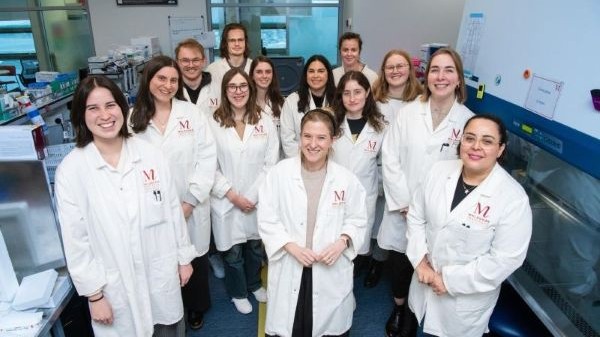
A collaboration between the Malaghan Institute and the University of Dundee will build a world-first, detailed picture of how immune cells change with age and bring a unique New Zealand perspective to the goal of developing more effective vaccines for older people.
Supported by Catalyst Seeding funding from the Royal Society Te Apārangi, the project will investigate how protein regulation changes with age and affects vaccine responses. Alongside the laboratory work, the team will engage with kaumātua (Māori elders), through the Rauawaawa Kaumātua Charitable Trust, recognising that vaccines only make a difference when communities trust the research behind them.
"New Zealand's population is ageing, and developing more effective vaccines for older adults is a promising way to support healthy ageing," says Dr Michelle Linterman, who is leading the project.
"Vaccination is among the most powerful tools we have for preventing disease, yet vaccines work less well as we get older, leaving older adults more vulnerable. By generating evidence to help design vaccines for ageing immune systems, this project aims to help reduce avoidable illness and support older adults to continue their vital roles within communities."
The Malaghan's Hugh Green Technology Centre has gifted the care of a DNA sequencer to the Mātai Medical Research Institute, enabling Tairāwhiti researchers to do DNA sequencing in the region for the first time.
The device allows researchers to look for genetic variation, changes in how genes are regulated and biological patterns associated with health, disease and the environment.
"Mātai and the Malaghan Institute are both small, independent research organisations with a shared supporter in the Hugh Green Foundation, and that has always made them feel like our cousins," says Malaghan Chief Technology Officer, Kylie Price.
"Placing this sequencer in their care is our way of sharing our capability with the wider scientific whānau. Whether we're studying the immune system or the brain, we are all working to understand the human body better and improve health outcomes for all."
Mātai researcher Dr Jordon Lima said an important part was ensuring genomic research developed in a way that reflected local priorities and values.
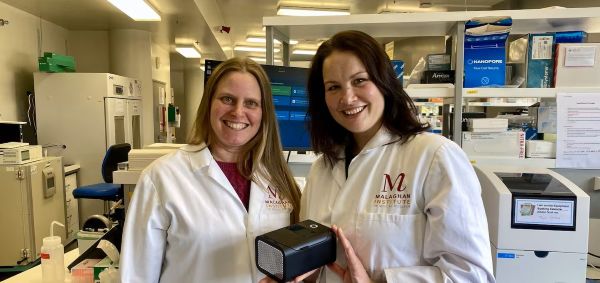
Malaghan head of genomics Dr Ava Handley (right) and her senior staff scientist Sventja von Daake (left) with the P2Solo device that will be transferred to Mātai. Photo: Malaghan Institute of Medical Research.
Gillies McIndoe Research Institute in Wellington continues to grow, welcoming new researchers while celebrating several postgraduate achievements.
The Institute recently welcomed Melissa Bourrai from Algeria. Her doctoral research investigates keloids, a type of scar tissue that grows beyond the original wound and can recur following treatment. Melissa is developing a three-dimensional laboratory model to explore how keloid tissue uses energy and processes nutrients, aiming to identify potential new treatment approaches. Another doctoral researcher is expected to join the team soon.
Meanwhile, three researchers have submitted their PhD theses and now await their oral examinations: Sam Siljee, investigating lung cancer; Freya Weth, exploring repurposed medications for glioblastoma; and Clara López Vásquez, investigating the biology of meningioma.
Mia Kibiki has also submitted her Master's thesis on the glioblastoma tumour microenvironment. The Institute congratulates Mia as she moves to Auckland to pursue her career.
"Seeing our researchers reach these milestones, while welcoming new talent, reflects the strength of our growing research community and the opportunities ahead," says Dr Clint Gray, Director.
"These achievements highlight our commitment to developing future biomedical researchers."
Mackie Research, in collaboration with Dovetail, is investigating the context in which oral fluid testing is more likely to be effective in contributing to road safety outcomes, and developing an evaluation framework. This framework will be used in the future to investigate the effectiveness of roadside oral fluid testing and how the tests contribute to improved road safety. The project is funded through the NZ Transport Agency (NZTA) Sector Research Programme.
Roadside oral fluid testing enables New Zealand Police to test drivers for recent drug use at any time and location. The research draws on local and international evidence to examine assumptions underpinning the testing, identify evidence gaps and investigate the factors that influence its effectiveness. This includes considering how testing interacts with other road safety interventions and the circumstances in which it is most likely to reduce drug-related harm.
Mackie Research Director Julia Mackie says the resulting framework will support ongoing monitoring and reporting, helping assess whether roadside testing achieves its intended outcomes, identify unintended consequences, and inform evidence-based improvements to road safety policy and practice.
New research co-authored by Motu Senior Fellows Dave Maré and Dean Hyslop finds the headline gap between public and private sector pay largely reflects differences in the jobs, not the sectors.
Official statistics show average pay in New Zealand's public sector is 25% higher than in the private sector. That figure is widely quoted and widely misunderstood. This research shows the raw comparison is misleading, because public and private sector jobs are quite different.
The researchers examined the pay gap from four angles, each using a different data source and method.
"First, we used Household Labour Force Survey (Income) data to decompose the raw hourly wage gap into components linked to observable differences in jobs and workers. Second, we used administrative data to distinguish pay differences associated with workers from differences due to the firms they work for. Third, we tracked earnings changes for workers who switch between public and private sector jobs. Finally, we used proprietary job evaluation and remuneration data from Strategic Pay to compare pay for jobs of similar size and content across the two sectors."
The key findings from the research show that comparing raw averages is misleading. Public and private sector jobs differ substantially, and the two sectors occupy largely distinct occupations, so simple comparisons conflate pay differences with job differences. In addition, the public sector has few very small jobs. This alone pushes its average pay upward. Large private sector jobs pay more than public sector jobs of similar size. Small public sector jobs pay slightly more than similar-sized private sector jobs. Finally, it was noted that the gender pay gap is smaller in the public sector.
Te Tira Whakamātaki has become the first Aotearoa Indigenous Peoples' Organisation to join the International Union for Conservation of Nature (IUCN) within the Oceania region.
The Māori environmental not-for-profit was admitted as a member in July 2026, under IUCN's Indigenous Peoples' Organisation membership category, strengthening Māori representation and leadership within the international conservation network.
Known as "The Watchful Ones", Te Tira Whakamātaki works at the intersection of science, stories, and sovereignty to protect whenua (land), wai (waters), taonga species, seeds, stories, and people, while helping restore balance to te taiao (the natural environment).
Rooted in mātauranga Māori and community knowledge, the organisation brings together kaitiaki, researchers, educators and others working to protect the environment. Its approach places Indigenous knowledge, cultural identity, and intergenerational responsibility at the heart of environmental action.
TTW Tumu Whakarae | Chief Executive Officer Melanie Mark-Shadbolt says membership of IUCN "creates opportunities for Te Tira Whakamātaki to collaborate with conservation organisations across Oceania and internationally, share knowledge, and strengthen recognition of Māori perspectives in biodiversity conservation and environmental stewardship."
An independent review into the Mount Maunganui landslide found that the hazard had been identified years before disaster struck. The lesson extends well beyond one campground: as extreme weather intensifies, New Zealand must rethink how and where it builds to better manage landslide risk to homes, buildings and communities, says a recent BRANZ article.
"The independent review released into the Mount Maunganui landslide delivers a sobering conclusion. The hazard was neither unknown nor unforeseeable. As retired High Court Judge Paul Davison noted, this was 'preventable' and 'a systemic failure with tragic consequences'.
"While the review focuses on a specific tragedy, its findings raise a much broader question for New Zealand. How many other homes, buildings and communities sit in areas where known natural hazards are underestimated, poorly understood, or insufficiently planned for?
"The answer matters, because landslides are not rare events or isolated incidents. They are one of New Zealand's most significant natural hazards, yet they receive a fraction of the attention devoted to earthquakes and volcanic eruptions."
Dr Tom Logan, Chief Technology Officer at Urban Intelligence, writes about preparing for an uncertain future.
"Climate risk assessments often do a reasonable job of acknowledging that the future is uncertain. They might present a range of sea-level rise scenarios, discuss uncertainty in emissions pathways, or recognise that future conditions cannot be predicted precisely. The problem is what happens when that uncertainty has to be translated into an actual planning decision. At that point, the range of plausible futures is often reduced to a single number that can be designed around. A better approach is to make the decision itself robust to uncertainty: test how options perform across a range of plausible futures, identify the conditions under which they stop working, and adapt as those conditions emerge.
"In our recent publication, led by Dr Patrick Curran, we examined this problem through a review of 39 climate risk and vulnerability assessments from cities around the world, using sea-level rise as a case study. We looked at how uncertainty was represented in the assessment itself, and then how that uncertainty was used when making policy recommendations or planning decisions. To do this, we used the Levels of Uncertainty framework."
HERA's Dr Van Thu Huynh built a chatbot that answers welding standard questions and shows its working.
Checking material test certificates can mean digging through hundreds of pages. It takes time, and tired eyes can miss things.
Van investigated whether AI could make this process faster and more reliable as part of HERA's project with the University of Sydney and ACM CRC.
The solution uses retrieval-augmented generation (RAG). The system searches the certificates, retrieves the relevant requirements from the compliance documents, and generates an answer grounded in those sources. Importantly, each answer can be traced back to its source.
The team tested the system using benchmark questions with verified answers taken directly from the relevant clauses. Two language models were tested using the same setup. GPT-4o performed strongly across the evaluation measures, while Llama-3.1's performance declined as the questions became more complex.
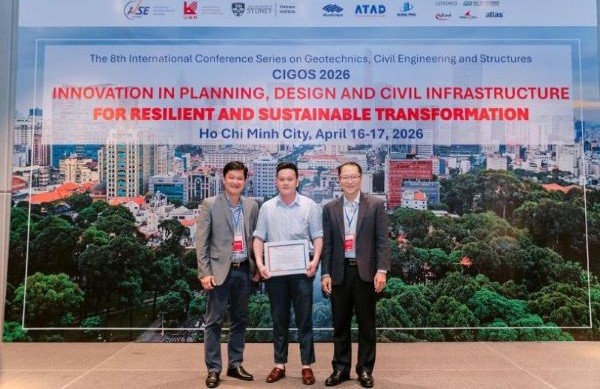
Dr Van Thu Huynh presented the work at the 8th International Conference on Geotechnics, Civil Engineering and Structures (CIGOS 2026) in Ho Chi Minh City, where he received the Best Oral Presentation Award. Photo: HERA.
A new collaboration in marine technology is helping safeguard threatened Hector's dolphins during the redevelopment of Akaroa Wharf.
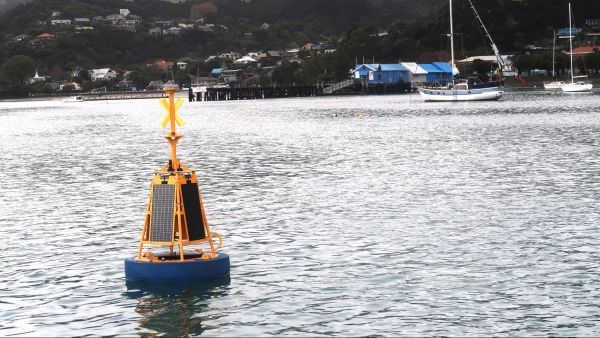
As the 137-year-old wharf undergoes a major rebuild, Cawthron's Blue Technology Group has partnered with Cetaware and Ocean Intelligence to deploy an innovative acoustic monitoring buoy in Akaroa Harbour.
Cawthron Research and Development Engineering Team Lead Paul Barter said the technology represents a significant advancement in acoustic monitoring.
"It's being used for both marine mammal detection and ensuring adaptive management so that the construction company remains within their consent limits."
Designed and built by Cawthron, the buoy houses a Cetaware system that uses artificial intelligence to continuously listen for the calls of marine mammals, with potential detections transmitted to a custom interface developed by Ocean Intelligence.
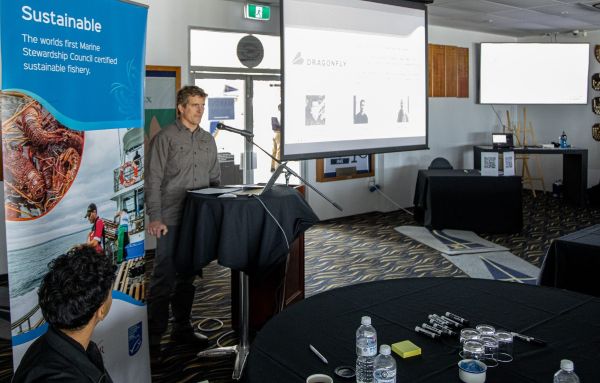
Dragonfly Data Science team members Dr Philipp Neubauer, Mark Jones, and Kusal Ekanayake joined Western Rock Lobster's Digital Ecosystem Roadshow in Western Australia to show fishers how data analysis and new technology can support fishing operations.
Western Rock Lobster (WRL), the peak body for Australia's commercial rock lobster industry, recently launched Member Central, a digital ecosystem providing fishers with access to services including catch recording, trip planning, safety training, community forums and an e-commerce platform.
Dragonfly ran workshops at events in Hillarys and Geraldton, sharing examples of its work with New Zealand fisheries, including the Bluff Oyster Fishery, pāua mapping, and its "Right Time Right Place" project.
Dragonfly specialises in analysing fishery data to develop tailored solutions that can help optimise fisheries' operations and sustainability.
"It wasn't until we were sitting down with the fishers on the roadshow asking about their day-to-day that we were able to understand how we could apply our technology to their processes or help mitigate their concerns," says Philipp.
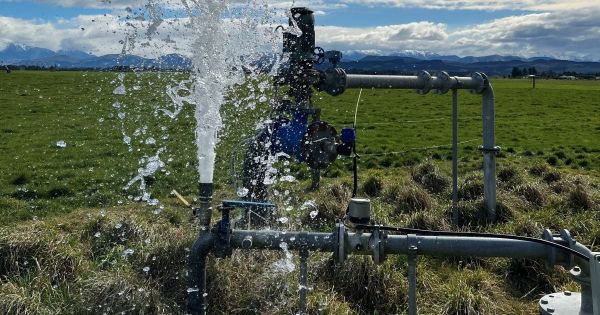
Groundwater is an important natural resource for Canterbury. It supports irrigation, stockwater, drinking water, spring-fed streams, and wetlands. As we approach another irrigation season, rural water users may be asking how groundwater resources looking, and what might summer bring?
The answer depends on two key factors: how much recharge the groundwater system has received over the past winter, and what weather patterns are likely to develop in the months ahead.
Much of Canterbury's groundwater recharge occurs over the latter part of autumn and through winter. During this time, soil moisture levels are generally higher and evapotranspiration rates are lower, allowing a greater proportion of rainfall to move through the soil profile and replenish aquifers. This past winter, data from several Canterbury Plains rainfall stations with long records shows below-average rainfall, indicating that recharge to the groundwater system is also likely to have been below average.
Groundwater levels vary across Canterbury due to differences in geology, rainfall patterns, and proximity to rivers. Shallower aquifers typically respond rapidly to recent rainfall and river flow changes, while deeper layers of the groundwater systems can take much longer to respond.
How do you know if water from a well is safe to drink?
For cities like Christchurch, where much of the drinking water comes from groundwater, answering that question is critical.
While groundwater is often naturally protected, understanding whether a source is vulnerable to contamination isn't always straightforward. Water suppliers need confidence that the water they draw from is protected from microbial and viral contamination, but no single test can provide a complete picture.
Understanding that risk is important because it influences key decisions, like the level of water treatment required and where risk management efforts should be focused.
Researchers explored multiple lines of evidence that can be combined to build a clearer understanding of groundwater security. Rather than relying on a single test, experts from Lincoln Agritech, PHF, and Aqualinc examined groundwater from several different angles, including how water moves through the ground, how long it has been underground, whether there are signs of influence from the land surface, and whether there is any evidence of viral contamination.
The story of leather increasingly begins before the tannery, with international expectations placing greater emphasis on provenance, responsible production, and evidence throughout the supply chain.
In this article, Geoff Holmes, Director of the New Zealand Leather and Shoe Research Association (LASRA), explores how New Zealand could use existing information from livestock production, meat processing, and leather manufacture to strengthen the provenance story behind its leather.
Expectations are broadening beyond tannery performance to include animal origin, land use, nature, animal welfare, and supply-chain due diligence. For New Zealand, the opportunity may be less about creating another system and more about connecting existing evidence into a credible production story.
LASRA research is investigating whether provenance can be supported by evidence within the leather itself. Recent research published in Talanta explored chemical markers in wet-blue leather using visible-near-infrared spectroscopy and machine learning.
The approach could complement farm records and chain-of-custody, connecting traceability with measurable evidence.
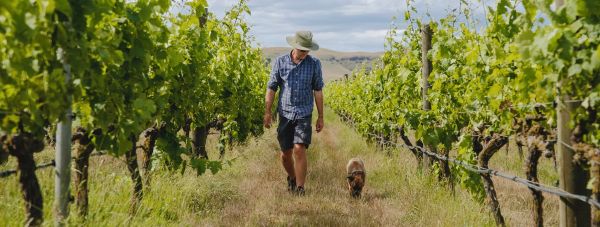
Bragato's 2027 Grower Trials will support practical, industry-led research to help New Zealand grape growers and winemakers tackle emerging challenges, test new approaches and make informed business decisions.
The trials address four key issues facing wine businesses.
In Hawke's Bay, Natural Selection, Craggy Range, Two Terraces and Paritua will investigate the lifecycle and spread of Australian Grapevine Moth, an emerging pest that can damage vines and increase management costs.
Loveblock Wines in Marlborough will test whether targeted soil nutrition and biological inputs can help manage vine decline, including evaluating recovery claims for conventional and organic products.
At Rothay Vineyard, in partnership with Nelson Marlborough Institute of Technology, a trial will investigate whether semi-minimal-pruned hedging can reduce labour costs and increase Sauvignon blanc yields while maintaining grape quality.
In Central Otago, Primary Insights, Amisfield and Chard Farm will compare bird-control methods, assessing costs alongside fruit damage, quality and yield.
New research by the Malaghan's Connor Laboratory, published in the prestigious PNAS journal, shows how directing the immune system towards conserved areas of the Covid virus and its many variants, using RNA technology, could be a significant step towards designing broad-spectrum vaccines.
The strength of vaccines in fighting infections is that an antigen can be presented to the immune system to create highly specific protection. But that specificity can be a double-edged sword. While strong protective immunity can be generated from a single antigen, the protection is only effective as long as that antigen doesn't change - a problem for rapidly mutating viruses like Covid or influenza.
Viruses are incredibly adept at mutating and altering their structure to evade detection by the immune system - a process known as antigenic drift. The current solution is to design new vaccines each year to keep up. While effective, it comes at a significant cost and requires populations to be regularly vaccinated to maintain widespread immunity and prevent outbreaks and pandemics.
"Like many viruses, the Covid virus changes frequently with multiple different circulating strains globally," says Dr Isabelle Montgomerie, a postdoc in the Connor Lab.
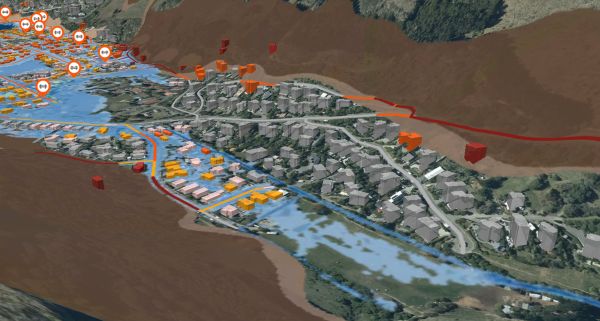
Dr Mitchell Anderson, Co-Founder and CEO of Urban Intelligence, writes about the importance of multi-hazard considerations for building community and infrastructure resilience.
"Multi-hazard events carry the largest losses and consequences to our communities. Reclassified EM-DAT records show that 19% of documented events can be classed as multi-hazard, yet those events accounted for 59% of global damage and losses. Yet failing to consider multi-hazard in land use, asset, emergency, and adaptation planning produces uninformed decisions, poor prioritisation and resource allocation, and, in some cases, increased risk.
"Almost every place on Earth faces more than one natural hazard. Yet the way we assess, plan for, and communicate risk in these multi-hazard environments often ignores how hazards overlap, interact, or compound.
"Intuitively, we can all picture a coastal community that sits between mountainous terrain and the sea, rich with aquifers that supply rural communities and agriculture, and a river flowing through the town out to the coast. Ask anyone in that community what hazards could affect them, and you'll quickly build up that multi-hazard landscape."
A new paper by Motu researchers, involving a literature review and expert dialogue, presents insights on how to build public support in advanced economies for funding climate mitigation abroad - by shifting narratives.
The project was conducted by Motu Research, the European University Institute, and the University of Zürich. It considered both conventional climate finance and carbon market approaches under the Paris Agreement.
The paper identifies a cluster of concrete national-interest arguments that could help build public support in advanced economies for funding international climate cooperation: partnering with others to tackle a global, collective issue; creating new market opportunities benefiting funders; investing in global and regional stability; reinforcing broader national objectives and processes; enhancing global mitigation effort; and finding the political middle ground.
How public narratives on funding mitigation abroad are developed and applied today will have implications for international climate cooperation over decades to come. Public narratives based on outdated, incomplete, or incorrect information can be improved.
BRANZ has now finalised their submission to the Transport and Infrastructure Select Committee on the Building Amendment Bill and which is now published on the BRANZ website. BRANZ supports the Bill's core aims: a faster, more affordable building system and a fairer approach to liability. However, BRANZ opposes the repeal of the Building Research Levy Act and have serious concerns about how changes to liability could leave homeowners at risk.
BRANZ's submission recommends changes to the current proposals. These include:
Ensuring homeowners have adequate protection for when things go wrong.
Making sure there is appropriate consenting for more complex sustainable builds.
Protecting the independence and long-term capability of New Zealand's building research system, through modernising the Building Research Levy Act - not repealing it.
Under the proposed Bill, practitioners, insurers, and warranty providers take on more responsibility for managing risk and will rely more heavily on impartial evidence and early warning of emerging risks. This means independent building research will become more important, not less. BRANZ supports modernising the Building Research Levy Act but does not support repealing it or replacing the current sector-led research system with a Ministry of Business, Innovation and Employment (MBIE)-administered model.
Cawthron/RNZ: Searching NZ waters for skincare breakthroughs
Scientists are searching New Zealand waters for marine organisms that could be the secret breakthrough ingredient for skincare products such as sunscreen and anti-aging creams. Radio New Zealand's Alexa Cook reports on the project.
It's a single word nobody wants to hear. We tend to talk about it as one thing, and to imagine that curing it should be one goal: find it, treat it, be done with it. So why after decades of cancer research, haven't we cured cancer once and for all?
Truth in a noisy world - 83rd Thomas Cawthron Memorial Lecture
Award-winning environmentalist and author Natalie Kyriacou OAM explores how disinformation has evolved from a tool used to influence consumer behaviour into sophisticated systems capable of influencing beliefs, identities, and public understanding.
IRANZ has gone social. For up-to-date information about the activities of our member organisations and notification of updates to the website follow us on the link below.
IRANZ is an association of independent research organisations. Its members undertake scientific research, development or technology transfer. Members include Aqualinc Research Ltd, Blue Barn Life Sciences, Bragato Research Institute, BRANZ, Cawthron Institute, DigiLab, Dragonfly Data Science, Gillies McIndoe Research Institute, HauHau Research, Heavy Engineering Research Association (HERA), International Global Change Institute (IGCI), Leather & Shoe Research Association (LASRA), Lincoln Agritech Ltd, Mackie Research, Malaghan Institute of Medical Research, Manawatū AgriFood Digital Lab, Medical Research Institute of New Zealand (MRINZ), Mātai Medical Research, M.E Research, Motu Economic and Public Policy Research, National Transport Research Organisation (NTRO), NZ Product Accelerator, Scarlatti, Spatial Justice Aotearoa, Takarangi Research Group, Te Tira Whakāmataki, Urban Intelligence, and WSP Research.
Contact: Dr Rob Whitney, Executive Officer, mobile: +64 27 2921050, email: information@iranz.org.nz